EN
EN


When manufacturers and designers specify a glass panel for an instrument display, bathroom enclosure, or smart device interface, dimensional accuracy is not optional — it is the foundation of product quality. Even a fraction of a millimeter of deviation can cause a glass panel to fail fitment tests, generate stress fractures, or compromise the finished assembly. For these reasons, understanding why laser cutting technology delivers superior accuracy is essential for anyone who sources, specifies, or fabricates a glass panel at any scale.
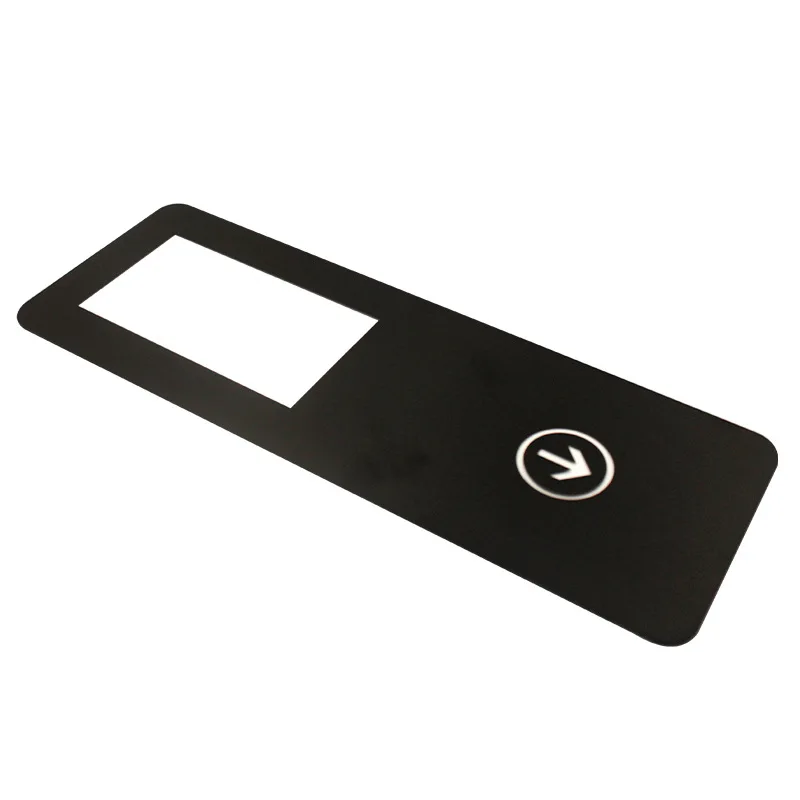
Laser cutting has fundamentally changed what is possible when shaping a glass panel. Unlike mechanical scoring and snapping, which depends on operator skill and physical force, laser cutting applies a precisely controlled energy beam that follows a digital path with repeatable exactness. Every glass panel produced through this method benefits from the same programmed geometry, meaning the first piece and the thousandth piece share identical dimensions. This consistency is what makes laser cutting the benchmark technology for precision glass panel fabrication in competitive industrial environments.
The Physics Behind Laser Precision on a Glass Panel
How the Laser Beam Interacts with Glass
A laser beam used to cut a glass panel is focused to an extraordinarily small spot, often measured in microns. This concentrated energy creates a highly localized thermal gradient within the glass panel material, allowing the cut path to follow the programmed line with minimal lateral deviation. Because the beam never physically contacts the glass panel surface in the way a blade does, there is no mechanical pressure that could push or shift the material off its intended path. The result is a glass panel edge that mirrors the digital design with sub-millimeter fidelity.
Glass is an amorphous solid, meaning its internal structure does not follow a crystalline grain. This characteristic actually benefits laser cutting, because a glass panel does not have preferential fracture directions the way crystalline materials do. The laser can guide a cut along any vector across the glass panel without fighting material grain, which is why complex shapes, curves, and tight radii are achievable on a glass panel without sacrificing edge quality.
Thermal Control and Edge Quality
Modern laser systems apply controlled thermal cycles to the glass panel, carefully managing the heat affected zone. By regulating pulse frequency, beam speed, and focal depth, operators ensure that each glass panel receives just enough energy to initiate a clean separation without introducing micro-cracks along the edge. A well-processed glass panel edge is smooth, even, and free of the chipping that mechanical cutting routinely produces. This directly translates to dimensional accuracy, because a chipped or uneven edge changes the effective size of the glass panel and creates assembly problems.
Digital Programming and Repeatability for Every Glass Panel
CNC Integration and Design-to-Cut Workflow
The accuracy of a laser-cut glass panel is inseparable from the digital workflow that drives the cutting system. Each glass panel specification — length, width, hole positions, notch locations, and corner radii — is entered as a precise CAD file and translated into machine instructions. The laser system follows these instructions without interpretation or manual adjustment, meaning human error is eliminated from the cutting stage. Whether a glass panel must fit inside a 0.5mm tolerance slot or match a complex contoured frame, the CNC-driven laser replicates the design with consistent fidelity across every glass panel in the batch.
Repeatability is the defining advantage of digital laser cutting for glass panel production. In traditional glass panel fabrication, each operator cut introduces slight variation based on hand pressure, tool wear, and fatigue. Laser systems eliminate these variables entirely. Once a glass panel program is validated, every subsequent glass panel produced from that file will share the same dimensional profile. This predictability is critical in industries such as medical instrumentation and smart home devices, where a glass panel must interface with precision-molded housings that have zero tolerance for size variation.
Real-Time Monitoring and Quality Feedback
Advanced laser cutting lines incorporate in-process measurement systems that verify each glass panel dimension as it exits the cutting stage. Sensors capture the actual edge position of the glass panel and compare it against the programmed target in real time. If any glass panel deviates beyond the accepted tolerance, the system flags it immediately, preventing non-conforming glass panel units from advancing further down the production line. This closed-loop feedback ensures that every glass panel reaching the customer meets the specified dimensional standard without relying solely on end-of-line inspection.
Practical Benefits for Custom Glass Panel Applications
Serving Instrument and Bathroom Glass Panel Requirements
Custom glass panel applications, particularly those used in instruments and bathroom environments, demand both precision and surface integrity. An instrument glass panel must align perfectly with sensor windows, display frames, and sealing gaskets. Any dimensional error in the glass panel will create gaps that allow moisture ingress or misalign the optical path. Laser cutting addresses these needs by producing an instrument glass panel with exact hole positions, precise outer dimensions, and clean edges that seal reliably without additional grinding. Bathroom glass panel products face similar demands, where a poorly dimensioned glass panel can prevent door mechanisms from closing flush or allow water to escape at panel joints.
Screen Printing Registration on a Precision Glass Panel
Many glass panel products require screen-printed graphics, scales, or functional markings that must align precisely with the physical edge of the glass panel. When the glass panel dimensions are consistent across an entire production run, the screen printing registration remains stable and the printed elements land in the correct position every time. If the glass panel varies in size from piece to piece, the printed graphics shift relative to the edge, creating visible misalignment that degrades both function and appearance. Laser cutting ensures that every glass panel in a screen-printed batch starts from the same dimensional baseline, making accurate registration achievable and reproducible.
FAQ
Can laser cutting be used on tempered glass panel products?
Laser cutting is typically applied to a glass panel before the tempering process, because the internal stress of a tempered glass panel makes post-tempering cutting impractical. A glass panel is cut, edged, and drilled to its final dimensions first, then subjected to the tempering heat treatment. This sequence ensures that the glass panel achieves its required shape with full laser precision before the structural strength of tempering is added.
How tight are the tolerances achievable for a laser-cut glass panel?
Depending on the glass panel thickness and the laser system used, dimensional tolerances of plus or minus 0.1 to 0.3 millimeters are commonly achievable for a precision glass panel. This level of accuracy is far tighter than what mechanical cutting can reliably deliver and is sufficient for demanding applications including instrument housings, smart device interfaces, and bathroom enclosure glass panel components.
Does laser cutting affect the strength of the glass panel?
When the laser parameters are correctly calibrated for the specific glass panel material and thickness, the heat-affected zone remains very narrow and the bulk glass panel strength is not significantly reduced. Proper edge finishing after laser cutting further improves glass panel edge strength by removing any micro-surface variations. A correctly processed glass panel retains excellent mechanical performance for both functional and decorative applications.