EN
EN


Choosing the right tempered glass for home appliances is a decision that directly affects safety, product lifespan, and consumer satisfaction. Whether the application is an oven door, a refrigerator shelf, a microwave turntable, or a washing machine porthole, tempered glass for home appliances must meet strict performance demands. The selection process is far more nuanced than simply picking a sheet of glass that fits a given dimension.
Manufacturers, procurement specialists, and product designers who source tempered glass for home appliances need a structured approach. Evaluating tempered glass for home appliances involves examining raw material quality, processing standards, certifications, optical properties, and dimensional precision. This guide outlines every critical factor you should assess before committing to a supplier or specification of tempered glass for home appliances.
Understanding the Core Quality Criteria
Raw Material and Glass Composition
The foundation of high-quality tempered glass for home appliances starts with the base glass material. Float glass produced with consistent chemical composition delivers better thermal stability and mechanical strength after the tempering process. When evaluating tempered glass for home appliances, ask suppliers about the silica purity, iron content, and overall batch consistency of their raw material. Low-iron tempered glass for home appliances is especially valued in applications where optical clarity is critical, such as oven doors and display panels, since it reduces the greenish tint visible in standard glass.
Tempered glass for home appliances processed from inferior float glass may exhibit surface distortion, inconsistent thickness, or internal stress concentrations that increase breakage risk. Always request material data sheets and verify that the glass substrate used for tempered glass for home appliances meets recognized flat glass standards before advancing to further evaluation.
Tempering Process and Stress Standards
The tempering process itself is what gives tempered glass for home appliances its defining safety characteristics. Proper tempering subjects the glass to a controlled heating and rapid cooling cycle, creating compressive stress on the surface and tensile stress in the core. The quality of tempered glass for home appliances is directly tied to the uniformity of this stress distribution. Non-uniform tempering results in bow, warp, or surface roller waves that compromise both fit and function.
For tempered glass for home appliances, surface compressive stress should typically reach values that ensure the glass fractures into small, blunt fragments rather than sharp shards. This fragmentation pattern is a primary safety advantage of tempered glass for home appliances and must be verified through standardized fragmentation tests. Request fragmentation test reports whenever you evaluate new sources of tempered glass for home appliances.
Evaluating Safety Certifications and Compliance
Recognized International Standards
Compliance with international safety standards is a non-negotiable benchmark when selecting tempered glass for home appliances. Standards such as EN 12150 in Europe and ANSI Z97.1 in North America define minimum requirements for surface stress, fragmentation count, and mechanical performance of tempered glass for home appliances. Tempered glass for home appliances destined for markets with strict import regulations must carry documented certification to avoid costly rejections or recalls.
Beyond regional standards, appliance-specific certifications may also apply. Some categories of tempered glass for home appliances, such as glass used in cooking appliances, must comply with additional thermal shock resistance requirements. Always match the certification scope to the specific end-use environment of the tempered glass for home appliances you are sourcing.
Supplier Quality Management Systems
A supplier's quality management infrastructure tells you a great deal about the consistency of tempered glass for home appliances you can expect over repeated orders. ISO 9001-certified production facilities demonstrate systematic process control, traceability, and corrective action capability. When sourcing tempered glass for home appliances at scale, supply chain reliability is as important as product quality. Audit the supplier's inspection protocols, including incoming raw material checks, in-process monitoring, and final outgoing quality control for tempered glass for home appliances.
Dimensional Precision and Surface Quality
Thickness Tolerance and Flatness
Dimensional accuracy is a practical quality indicator that directly impacts assembly in finished appliances. Tempered glass for home appliances must conform to tight thickness tolerances to fit precisely into frames, seals, and mounting hardware. For most categories of tempered glass for home appliances, acceptable thickness deviation is measured in fractions of a millimeter. Excessive thickness variation in tempered glass for home appliances can create assembly line stoppages, seal failures, or visible misalignment in the final product.
Flatness is equally critical. Bow and warp in tempered glass for home appliances are common defects that arise from poor furnace calibration or uneven cooling during production. Before approving tempered glass for home appliances for production use, test samples across a flat reference surface and measure maximum deviation. Establish clear flatness acceptance criteria in your procurement specification for tempered glass for home appliances.
Surface Clarity and Edge Finishing
Optical quality and edge finishing significantly influence both the perceived and actual quality of tempered glass for home appliances. Surface defects such as scratches, pits, inclusions, or stains in tempered glass for home appliances are visible in finished products and can cause consumer complaints. Establish visual inspection criteria that define acceptable and rejectable defect types for tempered glass for home appliances in your application.
Edge quality in tempered glass for home appliances is critical for safety and assembly. Polished or seamed edges reduce chipping risk and improve handling safety compared to raw cut edges. For premium categories of tempered glass for home appliances, CNC-processed edges with precise beveling or polishing also improve aesthetic appeal. Always specify edge treatment requirements clearly when placing orders for tempered glass for home appliances.
FAQ
What thickness is recommended for tempered glass for home appliances?
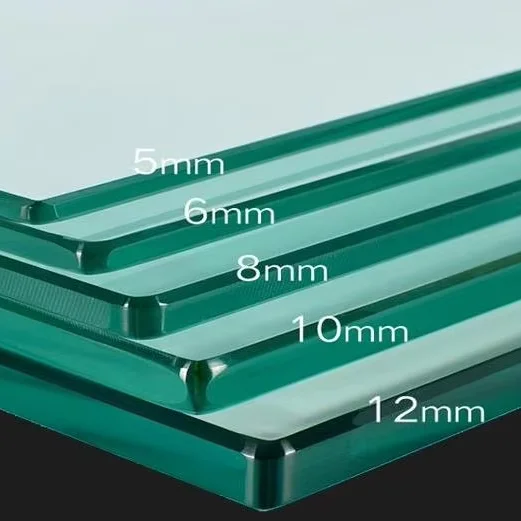
The appropriate thickness for tempered glass for home appliances depends on the specific application. Oven doors and washing machine portholes typically use tempered glass for home appliances ranging from 3mm to 6mm. Refrigerator shelves using tempered glass for home appliances are commonly 4mm to 5mm. Always refer to the mechanical load and thermal requirements of your specific appliance category when specifying thickness for tempered glass for home appliances.
How can I verify that tempered glass for home appliances has been properly tempered?
The most reliable verification method for tempered glass for home appliances is a polarized light examination combined with a fragmentation test. A fragmentation test on a sample of tempered glass for home appliances checks that breakage produces the required number of small fragments per unit area. Suppliers of tempered glass for home appliances should provide third-party test reports confirming fragmentation performance in line with the relevant standard.
Is low-iron glass always better for tempered glass for home appliances?
Low-iron tempered glass for home appliances offers superior optical clarity and is preferred when color neutrality matters, such as in oven doors or display-facing panels. However, standard tempered glass for home appliances with normal iron content is entirely suitable for applications where clarity is less critical, such as internal shelving. The choice between low-iron and standard tempered glass for home appliances should be driven by the visibility and aesthetic requirements of each specific application.