EN


Types of Tempered Glass: Full, Heat-Strengthened, HS, Chemical & Ultra-Clear Glass Differences
Tempered glass is a high-performance safety processed glass widely used in home appliance panels, electronic displays, architectural decoration, doors and windows, and industrial equipment. Most global B2B buyers struggle to distinguish different types of tempered glass, including fully tempered glass, heat-strengthened (semi-tempered) glass, homogenized HS tempered glass, chemically tempered glass, and ultra-clear tempered glass. Each tempered glass type features unique craftsmanship and functional properties.
Different tempered glass varieties vary greatly in physical strength, surface flatness, safety performance, self-explosion rate, and application scenarios. Selecting the right custom tempered glass type directly affects product safety, service life, and project cost. This professional guide fully explains the classification, production process, core features, and key differences of all tempered glass types, helping global customers pick the most suitable safety glass solution for their projects.
1. Fully Tempered Glass (Standard Full Tempered Safety Glass)
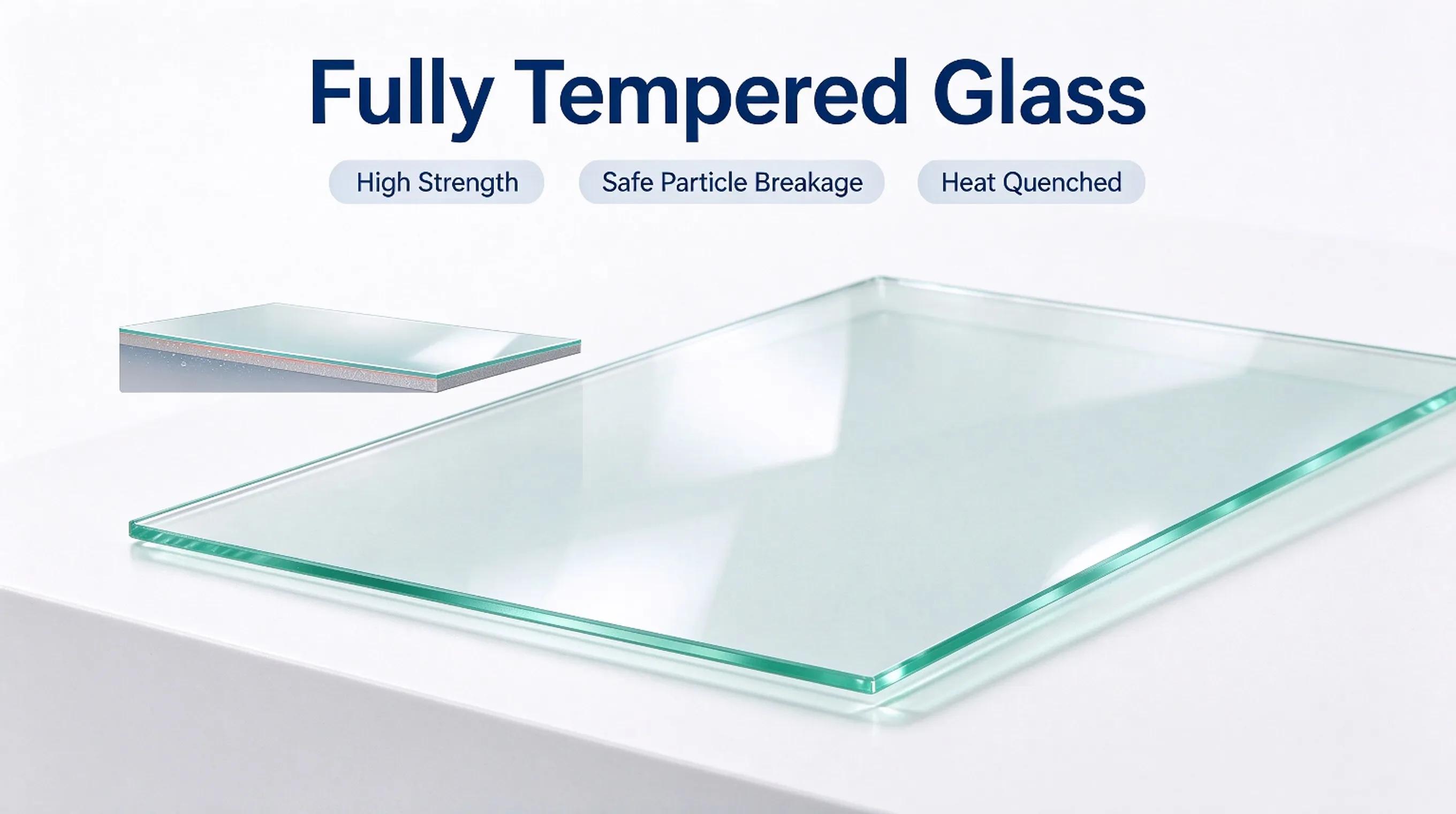
Craftsmanship Standard
Fully tempered glass is the most widely used physical tempered safety glass in the industry. We heat annealed float glass to nearly 700°C softening point, then perform strong and uniform air quenching to form stable high compressive stress on the glass surface. Its standard surface stress reaches 69–168MPa, fully complying with international safety glass standards for commercial and industrial use.
Core Features
- High Strength: 4–5 times stronger than ordinary float glass
- Safety Breakage: Breaks into uniform small obtuse particles without sharp knife-like fragments, greatly reducing injury risk
- Thermal Stability: Resists temperature difference of 200°C, not easy to burst under sudden cold and heat
- Shortcoming: Natural self-explosion risk exists due to internal nickel sulfide impurities; slight wave distortion may occur after tempering
Best Applications
As a certified safety tempered glass, it is ideal for home appliance touch panels, electronic device cover glass, building door and window glass, shower room glass, and all fully enclosed scenarios that require high explosion-proof and impact-resistant performance.
2. Heat-Strengthened Glass (Semi-Tempered Decorative Glass)
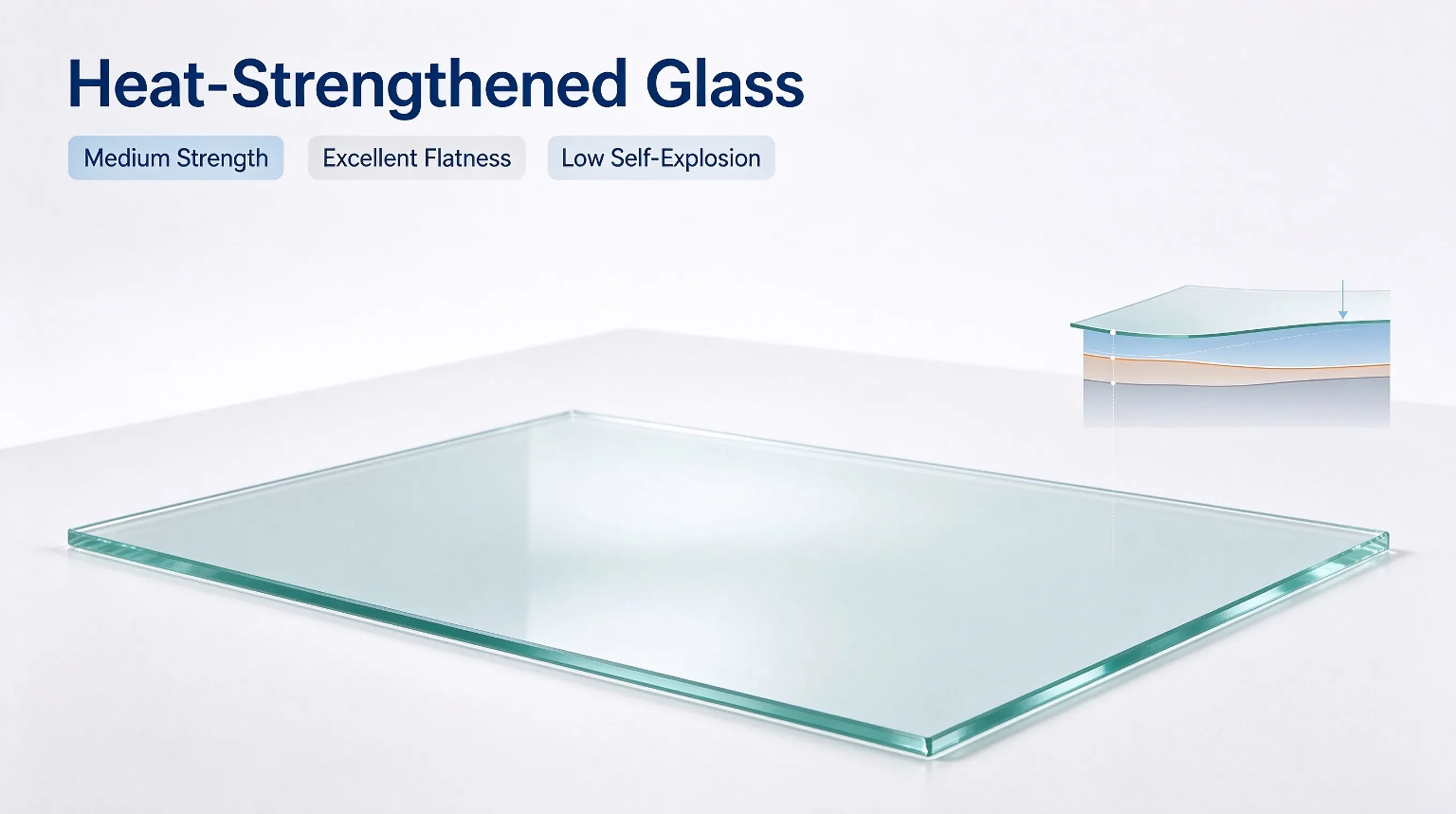
Craftsmanship Standard
Heat-strengthened glass, commonly known as semi-tempered glass, is a middle-grade processed glass between ordinary float glass and fully tempered glass. It adopts a similar high-temperature heating process as full tempering but with controlled weaker air cooling strength, keeping the surface compressive stress at 24–52MPa to balance flatness and structural strength.
Core Features
- Moderate Strength: 2–3 times stronger than ordinary glass
- Excellent Flatness: Almost no wave deformation, minimal optical distortion, far better flatness than fully tempered glass
- No Self-Explosion: Low stress structure avoids self-explosion caused by nickel sulfide
- Breakage Feature: Crack lines run through the whole piece without cross fracture; broken pieces can stay in the frame and will not fall freely
- Limitation: Does not belong to national standard safety glass, broken fragments are larger than full tempered glass
Best Applications
This low-distortion tempered glass is widely applied in architectural curtain wall glass, large decorative glass, retail display window glass, and other scenarios requiring ultra-high flatness, zero self-explosion risk, and low anti-fall safety requirements.
3. Homogenized Tempered Glass (HS Heat Soaked Tempered Glass)
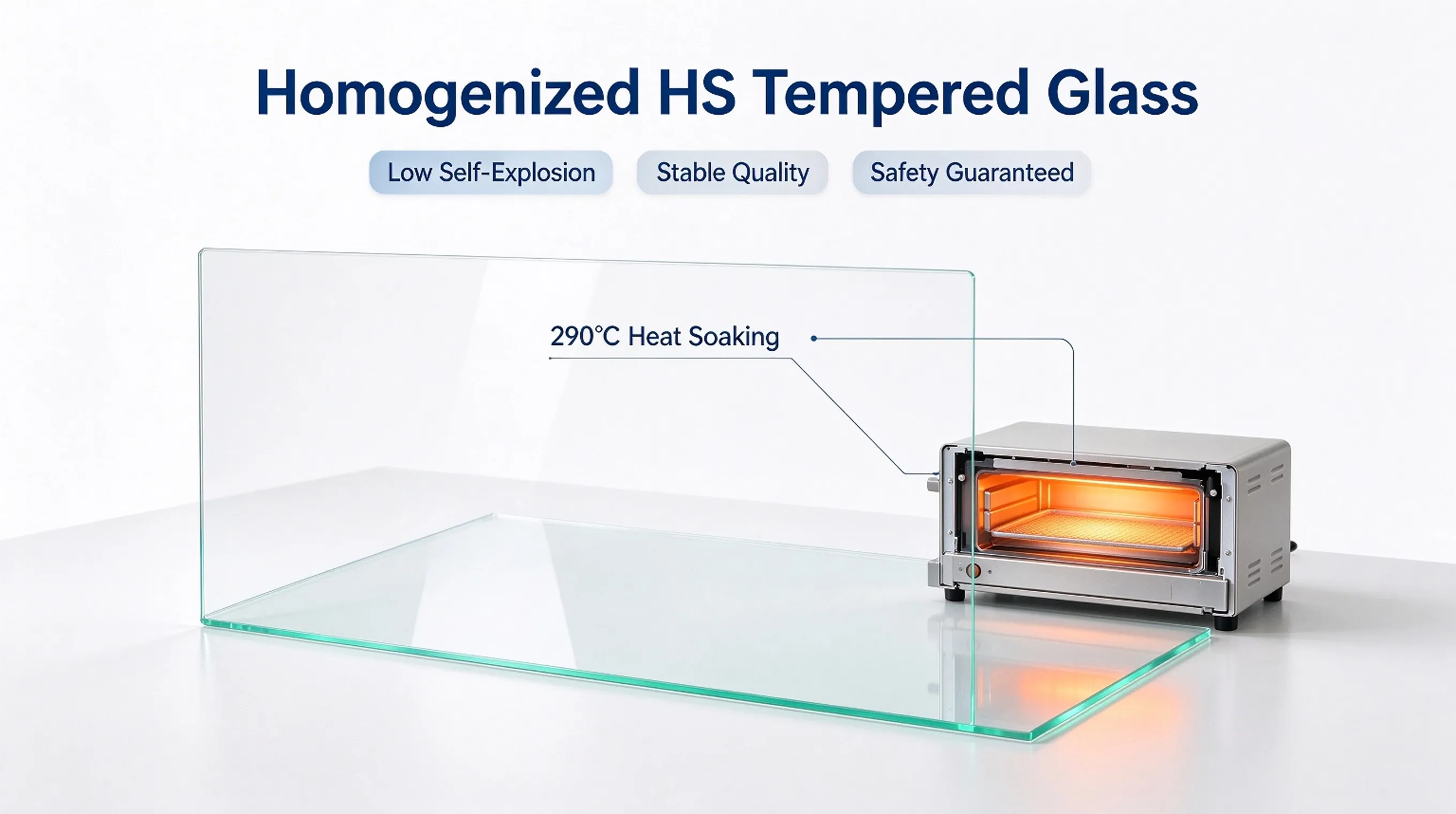
Craftsmanship Standard
Homogenized tempered glass (HS glass) is an upgraded and high-stability version offully tempered glass. After completing conventional physical full tempering, we add a professional homogenization heat soaking treatment: keeping the glass at a constant temperature of 290°C for a fixed period to force internal nickel sulfide impurities to expand and burst in advance in the factory, eliminating hidden self-explosion risks.
Core Features
- Near-Zero Self-Explosion: Eliminates almost all hidden self-explosion risks, solving the pain point of spontaneous breakage of traditional tempered glass
- Same Safety Performance: Retains all advantages of fully tempered glass, high strength and safe particle breakage
- Higher Stability: Batch quality is more stable, suitable for long-term outdoor engineering use
- Cost Increase: Extra heat soaking process leads to higher price than ordinary tempered glass
Best Applications
It is the preferred high-standard outdoor tempered glass for high-rise building curtain walls, outdoor engineering glass, super-large glass panels, and all premium projects that strictly prohibit post-installation spontaneous breakage.
4. Chemically Tempered Glass (Chemical Strengthened Precision Glass)
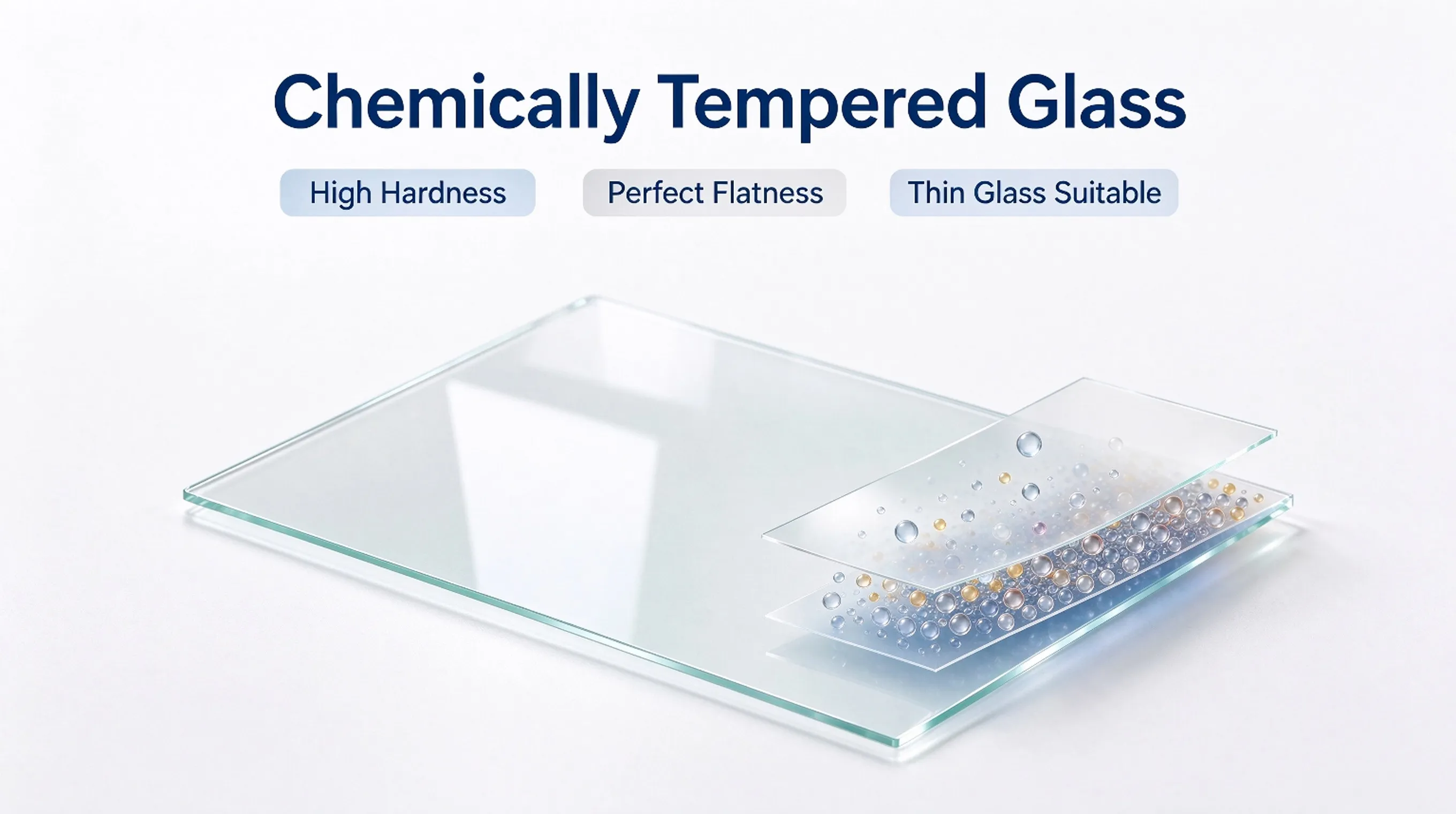
Craftsmanship Standard
Different from traditional physical air cooling tempering, chemically tempered glass adopts a professional chemical strengthening process. We immerse ultra-thin glass in high-temperature potassium nitrate solution for ion exchange, forming a dense, high-hardness compressive stress layer on the glass surface to achieve ultra-strong strengthening effects.
Core Features
- Ultra-High Surface Hardness: Strong scratch resistance and drop resistance
- Zero Deformation: No high-temperature softening process during production, absolutely flat without wave distortion
- Thin Glass Adaptation: Especially suitable for ultra-thin glass (0.7mm–3mm) that physical tempering cannot process
- Limitation: Low wind pressure resistance, not suitable for large building glass; high cost, mainly for precision panels
Best Applications
As a professional ultra-thin tempered glass, it is widely used in mobile phone cover glass, smart touch screen panel glass, instrument window glass, and various small precision electronic display panels.
5. Ultra-Clear Tempered Glass (Low-Iron High-Transparency Tempered Glass)
Craftsmanship Standard
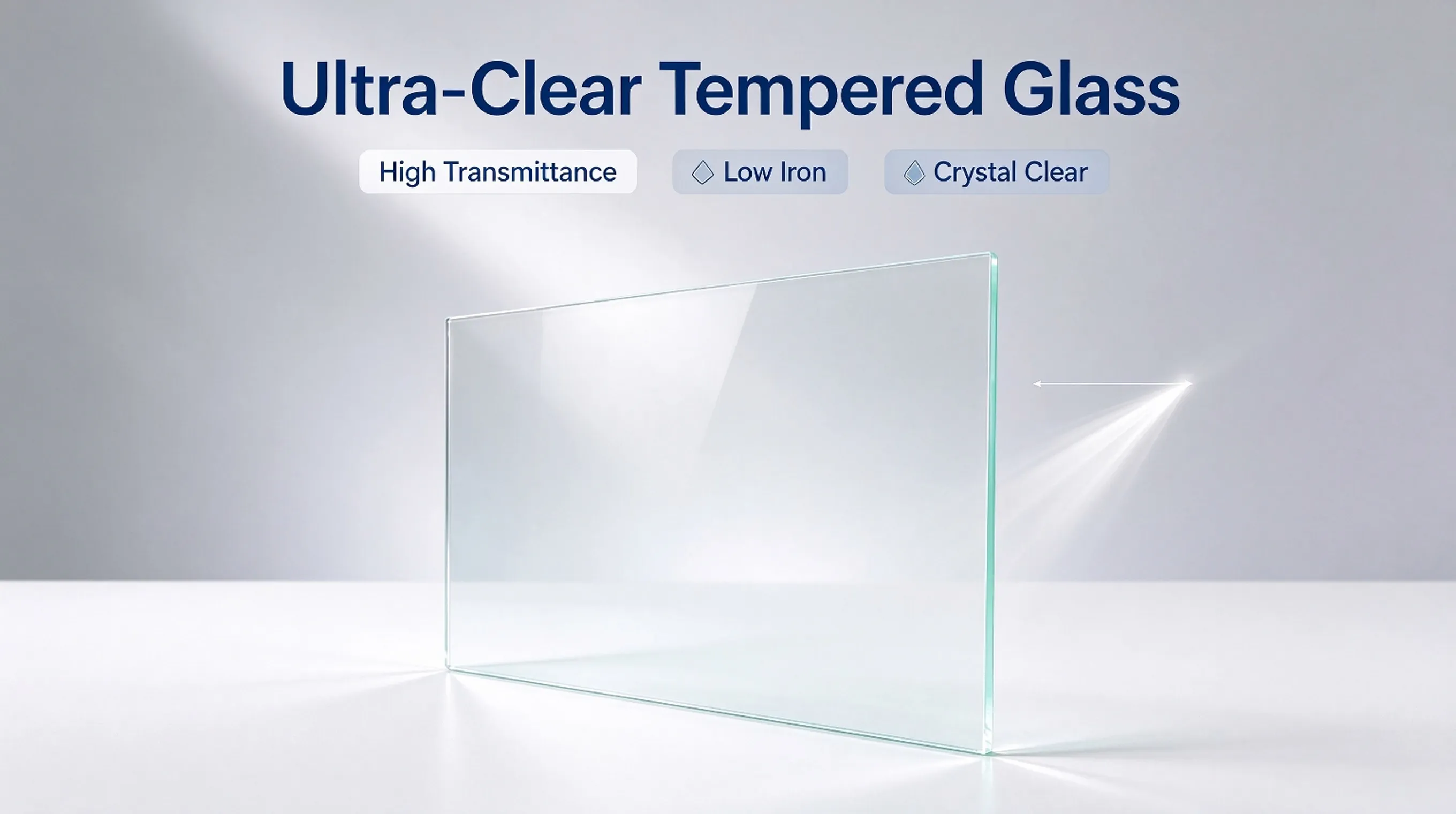
Ultra-clear tempered glass, also known as low-iron tempered glass, is a high-end upgraded transparent tempered glass. It adopts high-purity low-iron ultra-clear float glass as raw material (iron content <0.015%) and undergoes standard physical full tempering processing, featuring ultra-high light transmittance and high appearance grade.
Core Features
- Super High Light Transmittance: Transmittance ≥91.5%, no green edge, crystal clear vision
- Low Impurity: Few bubbles and particles, higher appearance grade
- Consistent Safety: Same strength and safety performance as standard fully tempered glass
Best Applications
This high-transparency tempered glass is perfect for high-end display panels, museum showcase glass, luxury furniture glass, high-grade decorative glass, and optical equipment glass requiring ultra-high light transmittance and crystal visual effect.
6. Core Differences of 5 Tempered Glass Types (Intuitive Comparison Table)
Glass Type |
Strength |
Flatness |
Self-Explosion Risk |
Safety Level |
Main Usage |
Fully Tempered |
High (4–5x) |
General |
Exist |
High (Safety Glass) |
Home appliance, safety door & window |
Heat-Strengthened (Semi) |
Medium (2–3x) |
Excellent |
Almost None |
Medium |
Curtain wall, decorative glass |
Homogenized HS Tempered |
High |
General |
Near Zero |
Highest |
High-standard outdoor engineering |
Chemical Tempered |
Ultra-high hardness |
Perfect |
None |
High (Thin panel) |
Electronic touch panel |
Ultra-Clear Tempered |
High |
General |
Exist |
High |
High-end display & decoration |
7. How to Select the Best Tempered Glass Type for Your Project?
- For safety priority: Choose fully tempered or homogenized tempered glass
- For high flatness & no self-explosion: Choose heat-strengthened semi-tempered glass
- For ultra-thin touch panels: Choose chemically tempered glass
- For high-end transparent display effect: Choose ultra-clear tempered glass
- For outdoor long-term engineering: Prioritize homogenized heat-soaked tempered glass to avoid after-sales self-explosion
8. Frequently Asked Questions About Tempered Glass Types
Q1: What is the biggest difference between full tempered and semi-tempered glass?
A1: Strength and safety. Fully tempered glass is 4–5 times stronger and breaks into safe fine particles; semi-tempered glass has better flatness but lower safety level with larger broken fragments.
Q2: Does tempered glass definitely self-explode?
A2: Ordinary fully tempered glass has a small probability of self-explosion; homogenized HS tempered glass can almost eliminate self-explosion risk.
Q3: Is chemical tempered glass better than physical tempered glass?
A3: No. Chemical tempering has better flatness and hardness for thin panels, but poor wind pressure resistance, not suitable for large building glass.
9. Custom Tempered Glass Service | All Types & Custom Processing
We are a professional China manufacturer specializing in custom tempered glass processing, covering all mainstream tempered glass types: full tempering, semi-tempering, homogenized HS heat soaking tempering, chemical tempering, and ultra-clear low-iron tempering. We provide one-stop custom glass solutions, including customized size, thickness, silk screen printing, AG/AF/AR coating, precision edge polishing, and hole drilling for home appliances, electronics, architectural decoration, and industrial equipment.
Contact us for professional tempered glass type selection guidance and free customized project quotation.